Strategic design tools for biobased, local, and circular fashion systems

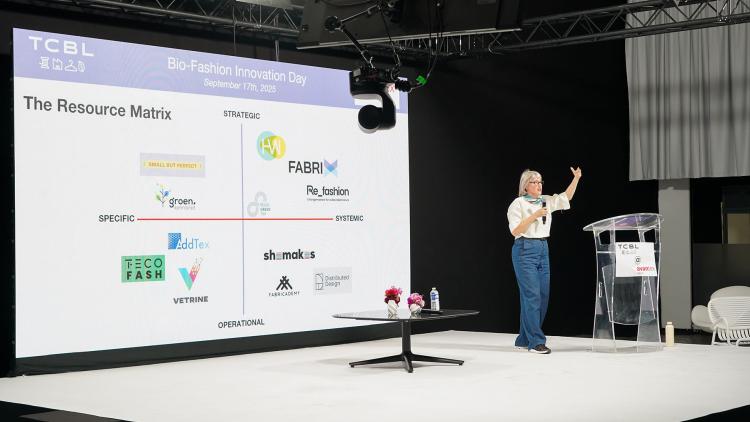
A key output of the HEREWEAR project’s design work stream took the form of a series of strategy and product development tools. These resources are available to download from the HEREWEAR HUB, alongside detailed manuals to support their use in community or industry workshops. The presentation at Avantex Bio-Fashion Innovation by University of the Arts London researcher Laetitia Forst was the opportunity to highlight the potential of these tools to the audience of fashion stakeholders including emerging entrepreneurs and brand sourcing experts.
The bio-materials strategy toolkit includes a range of resources that can either be used together or separately to guide stakeholders in the implementation of bio-based, local and circular principles.
The Material Lifecycle Map, or ‘materials wheel’ for example is a visualisation of the types of raw resources, fibre transformation processes, lifecycle extension strategies and end-of-life trajectories that can be embodied in a material or product. The tool supports fashion stakeholders in comparing different materials and identifying blind spots to investigate for sustainable and fair practices throughout the lifecycle. The aim of this resource is to increase the material literacy of actors across the sector.
The BIO TEN cards offer a strategic and holistic guide for business and product transformation. They detail a range of approaches and methods that businesses and innovators can take to enable change in businesses, communities, and policy. The recommendations range from specific product design for recyclability criteria, all the way to mindset shifts through new communication approaches. They can be supported with a range of inspiring examples that showcase the work of pioneers in the field.
The Garment Scenarios is the most prescriptive tool of the set. It follows a full lifecycle format to help designers and innovators to develop products that account for the full fashion system, including new business models and locally distributed manufacturing systems.
This range of resources provide a baseline for all actors in the quadruple helix model for innovation to collaborate. It bridges the academic research with industry needs and provides a framework to communicate effectively with communities and government. Alongside the other resources freely accessible from the HEREWEAR HUB, these are needed supports for the challenges ahead in the journey to making the fashion industry more sustainable.
Further reading: Conference paper on the Material Lifecycle Map: https://ualresearchonline.arts.ac.uk/id/eprint/20212/